
The Isle of Skye is a landscape forged by volcanic activity and sculpted by glaciation, leaving behind a dramatic topography that draws travellers from across the globe.
For those planning a Scottish Highlands adventure in 2026, Skye remains an absolute essential. From the jagged peaks of the Black Cuillin to the ethereal landscapes of the Trotternish Peninsula, the island offers an experience unlike any other in the United Kingdom.
Navigating this vast and rugged island requires careful planning, especially when departing from the Highland capital of Inverness.
This guide provides everything required to craft an unforgettable journey, highlighting why choosing a guided experience can transform a standard road trip into an immersive Highland adventure.
Why the Isle of Skye Should Anchor Your Scottish Itinerary
The allure of Skye lies in its sheer geographical diversity. It is a place where ancient geology meets deep-rooted Gaelic culture. Travellers do not simply drive through Skye; they are enveloped by it.
The island’s geography is dominated by the Cuillin mountain range, which provides a formidable backdrop to almost every vista. However, the coastal edges, with their plunging sea cliffs and hidden bays, are equally captivating. Whether your interest lies in capturing the perfect landscape photograph, understanding the turbulent history of the Highland Clans, or simply standing at the edge of the Atlantic Ocean, Skye delivers.
Essential Landmarks and Hidden Landscapes

The Old Man of Storr
No visit to the Isle of Skye is complete without gazing upon the Old Man of Storr. This towering pinnacle of basalt rock stands sentinel over the Sound of Raasay. Formed by a massive ancient landslip, the Storr is visible from miles away, but hiking up to its base reveals the true scale of this geological marvel. The path has seen significant upgrades in recent years, making the ascent more accessible, though sturdy footwear remains vital.
The Quiraing
Further north on the Trotternish Peninsula lies the Quiraing, another landslip landscape that feels genuinely otherworldly. The terrain here is a labyrinth of high plateaus, concealed valleys, and dramatic rock pinnacles.
Walking through the Quiraing provides a profound sense of scale and isolation. It is a location that rewards early risers, as the morning light casting shadows across the formations is spectacular.
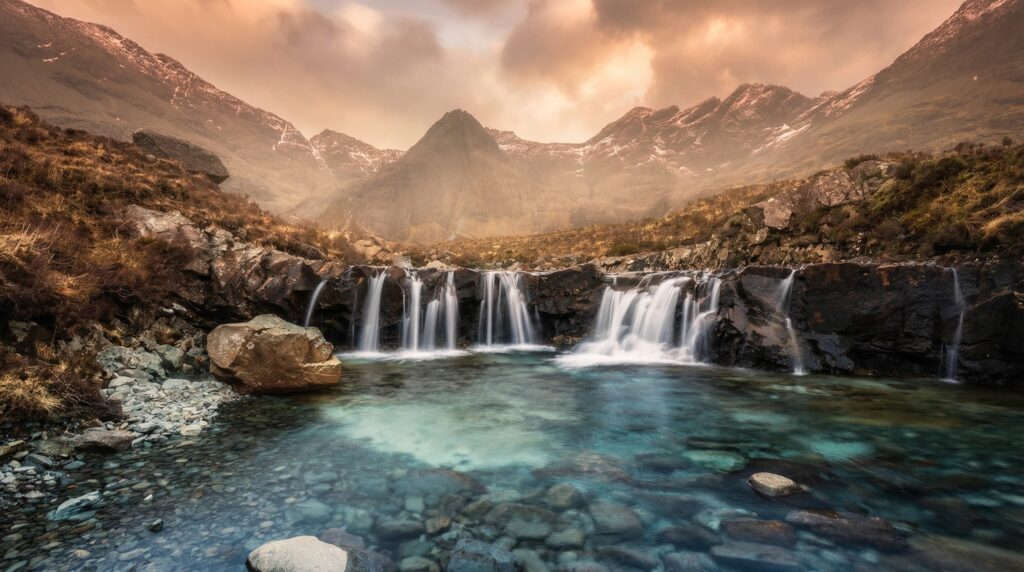
The Fairy Pools
Situated at the foot of the Black Cuillin near Glenbrittle, the Fairy Pools are a series of crystal-clear rock pools fed by mountain streams. The vibrant blue and green hues of the water, set against the dark, brooding mountains, create a stunning visual contrast.
While very popular, visiting with a local guide often means arriving at optimal times to appreciate the serenity before the midday crowds arrive.
Neist Point Lighthouse
Located on the most westerly tip of Skye, Neist Point offers dramatic sea cliffs and uninterrupted views across the Minch to the Western Isles. The walk down to the lighthouse is steep but rewarding, frequently offering sightings of minke whales, dolphins, and basking sharks during the summer months.
Dunvegan Castle and Gardens
For a dive into human history, Dunvegan Castle is the oldest continuously inhabited castle in Scotland and has been the ancestral home of the Chiefs of Clan MacLeod for 800 years.
Exploring the castle provides insight into the complex clan system that once ruled the Highlands. You can discover more about their conservation work and visiting hours at the official Dunvegan Castle website (https://www.dunvegancastle.com).

Portree Harbour
As the largest town and capital of the island, Portree serves as a vibrant cultural and commercial hub. The harbour is famously lined with pastel-coloured houses that reflect beautifully in the sheltered waters. It is an excellent location to stop for a meal, browse local crafts, or simply watch the fishing boats land their daily catch.
Maximising Your Journey: The Route from Inverness
While the destination is spectacular, the journey to Skye is equally breathtaking, particularly when starting from Inverness. Driving west takes you along the shores of Loch Ness, through the dramatic, sweeping scenery of Glen Shiel, and past the iconic Eilean Donan Castle. Perched on its own small tidal island where three sea lochs meet, it is one of the most photographed castles in the world. You can view their opening times and history at the Eilean Donan Castle website (https://www.eileandonancastle.com/).
Navigating these winding Highland roads while trying to appreciate the scenery can be stressful for drivers unfamiliar with single-track etiquette and local conditions. This is where local expertise proves invaluable.
By booking the Highlander Private Tours Isle of Skye experience (https://highlanderprivatetours.com/isle-of-skye-tour), you hand the logistics over to a seasoned local professional. You can relax, take in the sweeping views, and listen to authentic stories of Highland history, rather than worrying about the next passing place or trying to find parking at busy trailheads.
Local Expert Insights: Weather, Timing, and Practicalities
Navigating the Highland Weather
The weather on Skye is notoriously changeable. It is entirely possible to experience bright sunshine, driving rain, and strong winds within a single afternoon. The key to enjoying the island is preparation.
Layered clothing is essential, starting with a moisture-wicking base, adding an insulating mid-layer, and finishing with a high-quality waterproof and windproof outer shell. An umbrella is generally useless in Highland winds; a good waterproof hood is a strict necessity.
Timing Your Visit
The summer months of July and August bring the warmest weather and the longest daylight hours, but they also bring the highest number of visitors and the infamous Highland midge.
For a more tranquil experience, the shoulder seasons are highly recommended. May and June often provide crisp, clear days with less rainfall, while September and October offer dramatic autumnal lighting and a quieter atmosphere on the roads.
Crowd Avoidance and Pacing
Skye’s popularity means that key sites like the Storr and the Fairy Pools can become congested by mid-morning. A local guide knows exactly how to sequence an itinerary to avoid the worst of the crowds. Sometimes this means visiting a major site late in the afternoon when the light is softening and the tour buses have departed, or taking an alternative, lesser-known route that offers equally stunning views without the heavy foot traffic.

Highland Hospitality: Food and Drink
Exploring the rugged landscape builds a healthy appetite, and Skye boasts some of the finest natural larders in the world. The island is renowned for its exceptional seafood, landed daily in ports like Portree.
From simple, fresh fish and chips eaten by the harbour to fine dining utilising local venison and foraged ingredients, the culinary scene is thriving.
Furthermore, no trip to the island is complete without experiencing its whisky heritage. The Talisker Distillery, located on the shores of Loch Harport, produces a wonderfully peated, maritime single malt that perfectly encapsulates the character of the island. Details on their tasting tours can be found on the Talisker Distillery website here: (https://www.malts.com/en-row/distilleries/talisker).
Frequently Asked Questions About Visiting the Isle of Skye
How many days do I need to see the Isle of Skye?
While a full-day tour from Inverness provides a fantastic overview of the island’s major highlights, spending two or three days allows for a deeper exploration of its distinct peninsulas, longer hikes, and a more relaxed pace.
Can you do a day trip to Skye from Inverness?
Yes, a day trip from Inverness is entirely feasible and highly popular. It requires an early start and covers a significant distance, but a well-planned private tour ensures you see the very best of the island, including the magnificent journey there and back, without the fatigue of driving yourself.
When is the midge season in Scotland?
The Highland midge is most active from late May through to September. They thrive in damp, still conditions, particularly at dawn and dusk. A breezy day will keep them grounded, but packing a reliable insect repellent like Smidge is always a wise precaution during the summer months.
Do I need specialist hiking gear to visit the main sights?
You do not need technical mountaineering equipment for the main tourist trails like the Fairy Pools or the Old Man of Storr, but sturdy, waterproof walking boots are essential. The terrain is frequently muddy, rocky, and uneven, making trainers or casual shoes unsuitable and potentially unsafe.
Are the roads on Skye difficult to drive?
Many roads on Skye, particularly those leading to remote sights like Neist Point or through the Quiraing, are narrow, winding single-track roads with designated passing places. They require patience, courtesy, and a good understanding of right-of-way rules, which is why many visitors prefer to hire a local driver-guide.
Are there public toilets and facilities on the island?
Facilities are available in main settlements like Portree, Broadford, and Dunvegan, but they are scarce in remote locations. It is crucial to utilise facilities when they are available and to respect the landscape by leaving no trace when out in the wild.
Begin Your Skye Adventure with Highlander Private Tours
The Isle of Skye offers a landscape that will linger in your memory long after you have returned home. However, the difference between a standard trip and an extraordinary one lies in local knowledge. Understanding the rhythm of the island, the hidden histories of the glens, and the safest, most scenic routes elevates the entire experience.
If you are planning to explore the misty isle in 2026, let Highlander Private Tours craft the perfect itinerary. Reach out today to discuss your travel plans, and allow a local expert to guide you through one of the most magnificent locations on earth.


